Author: Brian Clark

  • Doug Ford targets eight U.S. states for retaliatory tariffs as Canada trade war with Trump escalates

    Doug Ford targets eight U.S. states for retaliatory tariffs as Canada trade war with Trump escalates

    Ford’s proposed list is intended to increase pressure on states with significant commercial ties to Canada and considerable political influence in Washington. The plan also highlights how rapidly tensions are rising between two economies that remain deeply connected.

    Doug Ford is calling on Canada to impose additional retaliatory tariffs on imports linked to eight U.S. states, including Alabama, Arkansas, Florida, Iowa, Missouri, Montana, Texas and Wisconsin. The Ontario premier says those states should be singled out because of their political importance to the current U.S. administration’s support base as trade negotiations between Canada and the United States falter and tariff tensions increase.

    The proposal is significant because Canada represents a major export market for each of the eight states. Ford’s approach would transform a nationwide trade dispute into a more targeted campaign for political and economic pressure. Any decision to impose Canadian tariffs, however, would ultimately rest with the federal government in Ottawa rather than Ontario.

    Ford’s list targets export-dependent states

    Ford outlined the eight-state strategy in an August 17 letter to Prime Minister Mark Carney, according to reporting about the correspondence. He urged the federal government to place additional retaliatory tariffs on goods originating from those states.

    Geography is not what ties the states together. They stretch across the South, Midwest, Mountain West and Texas. Their common factors are political importance and substantial dependence on trade with Canada.

    • Alabama Canada is the state’s largest market for goods exports, with approximately $4.3 billion in exports reported last year.
    • Arkansas Canada ranked as the state’s second-largest export destination, receiving about $1.3 billion in goods during 2025.
    • Florida Canada was Florida’s second-largest export market, accounting for roughly $5.6 billion in 2025.
    • Iowa Nearly 30 percent of the state’s exports, worth about $5 billion, went to Canada in 2025.
    • Missouri Canada was Missouri’s largest export market, representing approximately $6.7 billion and 34 percent of total exports.
    • Montana Almost half of the state’s exports were sent to Canada, with the total reaching about $1 billion.
    • Texas Canada ranked as the state’s second-largest foreign market and received just under $35 billion in exports.
    • Wisconsin Canada was Wisconsin’s largest export destination, taking roughly $7.6 billion in goods, equal to about 28 percent of the state’s exports.

    Those numbers help clarify Ford’s strategy. Tariffs aimed at products from states that sell relatively little to Canada would provide limited leverage. Measures affecting states with substantial cross-border trade could attract attention quickly from manufacturers, agricultural groups, exporters and elected officials.

    A proposal, not an Ontario tariff

    Ford’s intervention carries political significance, but it does not mean tariffs have already been imposed. He leads the government of Ontario, while national trade policy and customs measures remain under the authority of Canada’s federal government.

    Carney’s office said the prime minister met with provincial and territorial leaders to discuss dollar-for-dollar counter-tariffs expected to begin in September. Important details remain unsettled, including which products could be targeted, what rates Ottawa may apply and whether Ford’s entire eight-state proposal will become part of the federal response.

    That difference is important for businesses attempting to prepare for possible changes. Targeting particular states can send a political message, but tariffs are generally imposed on categories of imported products at the border rather than directly on state governments. The final structure of the measures would determine which businesses and consumers ultimately face additional costs.

    Trade talks collapsed after optimism

    The latest escalation followed an abrupt change in negotiations. Canadian and American officials had recently expressed optimism that an agreement was within reach. Dominic LeBlanc, Canada’s minister responsible for U.S. trade relations, said a deal was very close shortly before negotiations broke down.

    Carney later said Canada suspended the talks and recalled its negotiating team to Ottawa after what he described as unfair last-minute changes from the United States. The Office of the U.S. Trade Representative offered a different version, saying Canada had refused to sign an agreement reached earlier in the week and introduced additional demands.

    That disagreement sits at the heart of the current dispute. Both governments accuse the other of disrupting a possible agreement, making an immediate return to negotiations more difficult even though each side has strong economic reasons to prevent further damage.

    The United States then introduced a new 50 percent tariff on many Canadian products. The U.S. trade representative’s office said the measure would affect close to $20 billion worth of Canadian imports. Carney described the tariff as a miscalculation and said Canada would not return to the previous relationship.

    Why the eight states matter

    More than three-quarters of Canada’s goods exports are sent to the United States, while Canada ranks as the second-largest foreign market for U.S. goods after Mexico. That degree of economic integration gives Canada potential leverage through retaliation, but it also creates significant risks.

    Texas demonstrates the scale of those ties. The state exports far more to Mexico than to Canada, but Canada still ranks as its second-largest international market. In Iowa, Missouri, Montana and Wisconsin, Canada represents an even greater share of overall state exports, making changes in Canadian demand potentially more disruptive.

    The types of products moving across the border are also important. Alabama exports transportation equipment and metals to Canada. Iowa’s trade with Canada includes agricultural products and chemicals. The two countries also share highly integrated supply chains involving vehicles, auto parts, machinery, energy products and electrical equipment.

    As a result, tariffs intended to increase political pressure can also affect companies that rely on cross-border components and raw materials. American exporters could experience weaker demand, while Canadian businesses and consumers may face higher costs or fewer alternatives for obtaining certain goods.

    Pressure tactics carry economic costs

    Ford argues that Canada should respond aggressively and make use of every available economic tool. His proposed strategy seeks to concentrate the impact in politically important states rather than distributing retaliatory measures evenly across American imports.

    There is also concern within Canada about the consequences of such an approach. Carney has said that some American companies and states are innocent bystanders in a dispute they did not create. His comments recognize that retaliatory tariffs can harm businesses that depend heavily on cross-border commerce even when those companies have little influence over federal trade decisions.

    American lawmakers from northern states have raised similar concerns. Maine Republican Sen. Susan Collins warned that unstable trade relations were putting businesses in her state at risk and could increase costs for families. Vermont Democratic Sen. Peter Welch described the 50 percent tariffs on Canadian goods as harmful to businesses and farmers in border states.

    The disagreement is not about whether the two economies are closely connected. The depth of those trade relationships is well established. The larger question is whether increasing economic pressure will help produce a stronger agreement or simply harden political positions while raising costs on both sides of the border.

    September is the next test

    The most immediate question is what products Ottawa will include in the counter-tariffs expected to take effect in September. Ford has presented a political framework for targeting U.S. states, but the federal government has not publicly confirmed a final list of products or indicated whether all eight states in his proposal will be included.

    Another unresolved issue is whether the growing tariff dispute will remain a negotiating tactic or develop into a longer-term change in relations between Canada and the United States. Canada has been working to expand commercial ties with other countries, while its trade with the United States reportedly declined in 2025 for the first time in a decade outside the pandemic period.

    For now, Ford’s eight-state proposal offers a clear indication of where Canadian officials believe economic and political leverage may be found. It also exposes the limits of that strategy. The more effectively tariffs place pressure on American exporters, the greater the chance that Canadian companies depending on those same products will experience consequences of their own.
  • MAGA backlash erupts against USS Abraham Lincoln sailors after complaints over grueling 250-day deployment

    MAGA backlash erupts against USS Abraham Lincoln sailors after complaints over grueling 250-day deployment

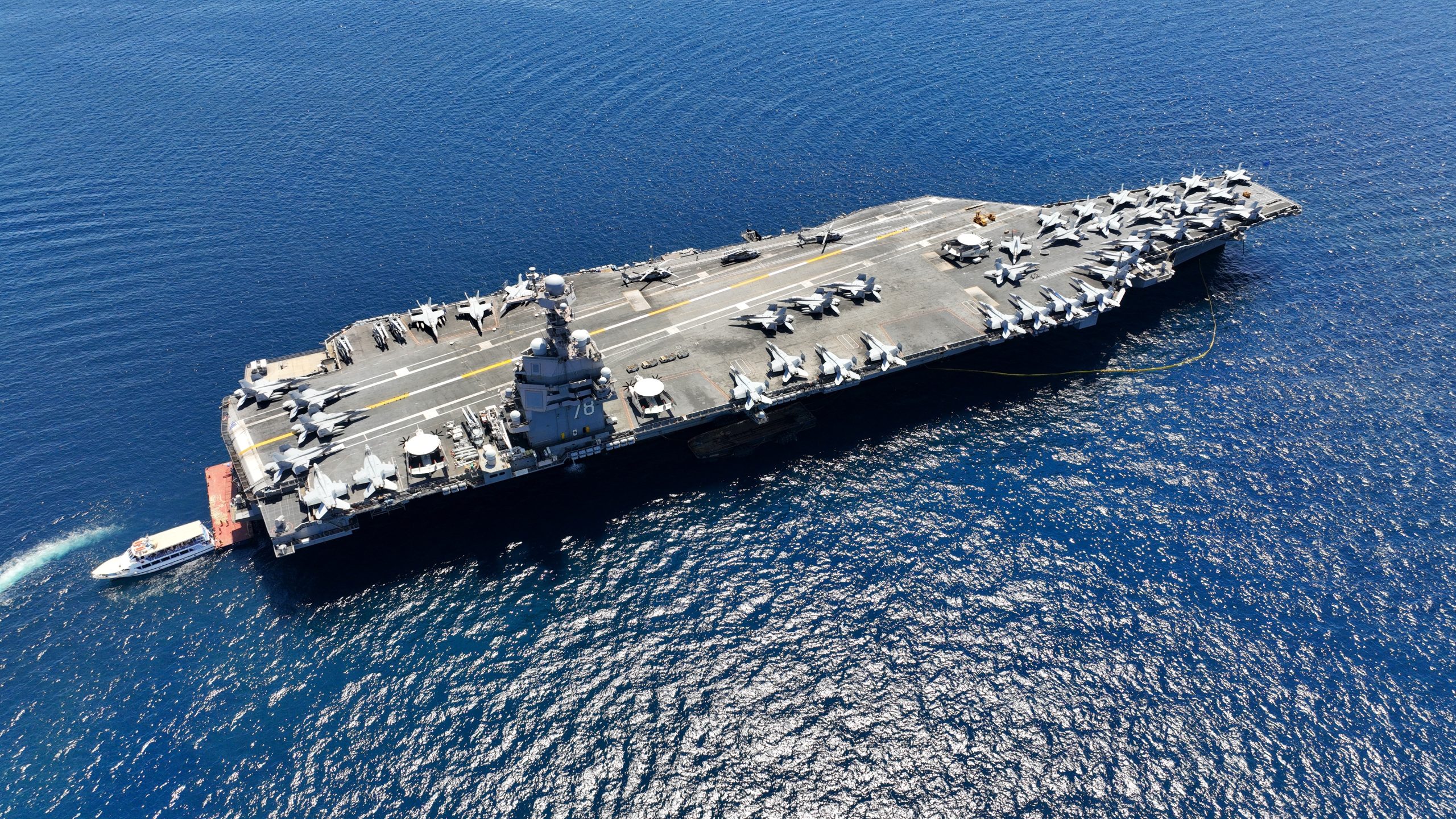
    The controversy surrounding the USS Abraham Lincoln has moved beyond conditions at sea. As the aircraft carrier makes its way home, political backlash has placed sailors and their families at the center of a broader debate over how their complaints should be understood.

    MAGA supporters have criticized Navy sailors over complaints connected to the USS Abraham Lincoln, according to reporting from Rolling Stone, turning concerns from aboard the carrier into a political controversy. The backlash has gained attention because the United States Navy crew is returning from an unusually long deployment that included family reports about food, supplies and declining morale.

    The USS Abraham Lincoln is now returning toward San Diego after spending more than 250 days at sea, according to NBC News. The dispute is not only about whether every individual allegation can be independently confirmed. It also raises the question of whether sailors and their families should be considered credible enough to have their concerns heard when difficult deployment conditions become part of the public conversation.

    Complaints became a political target

    The controversy developed from reports describing life aboard the Lincoln during its prolonged deployment in the Middle East. Family members who spoke with NBC News raised concerns about limited food and supplies, disruptions to hot water, delayed mail and the mental well-being of sailors.

    Those accounts have not been presented as a comprehensive official review of conditions aboard the carrier. Instead, they represent firsthand experiences shared through family members, while Navy officials and members of the administration have challenged the broader characterization of conditions on the ship.

    That distinction matters. Serious complaints do not automatically prove every claim being made, just as an official response does not necessarily settle what individual sailors experienced. Political reactions that portray the concerns as weakness, disloyalty or unnecessary complaining can overlook the complexity between those two positions.

    A deployment far beyond expectations

    The Lincoln departed San Diego on Nov. 21 and was originally expected to complete its deployment in May, according to NBC News. Its assignment was later extended as the United States remained involved in the war with Iran following American and Israeli strikes in late February.

    By the time the carrier left the Middle East, it had been deployed for roughly nine months and had spent more than 250 days at sea. NBC reported that the ship had not visited a port since December, resulting in more than 200 consecutive days at sea.

    That extended timeline provides important context for the complaints. Aircraft carriers are designed for lengthy deployments, and their crews receive training to operate under demanding conditions. Still, carrier deployments normally include port visits that provide opportunities for resupply, maintenance and a temporary break from the confined routine of life aboard a ship.

    NBC reported that approximately 5,000 sailors and Marines were aboard the Lincoln. On a vessel carrying that many people, even difficulties that do not affect the entire crew can become serious when they continue for months.

    Officials challenged the grim picture

    Senior military and administration officials have rejected suggestions that conditions aboard the Lincoln amounted to a widespread crisis. Adm. Brad Cooper, commander of U.S. Central Command, said concerns had been addressed and stated that the carrier recorded some of the lowest numbers of mental health related cases among active aircraft carriers.

    Defense Secretary Pete Hegseth said reports describing conditions aboard the ship had been completely misrepresented, according to NBC. President Donald Trump also dismissed concerns about the length of the deployment and said it had not been nearly long enough.

    Those responses illustrate a longstanding tension in reporting about military operations. Commanders have responsibilities to protect operational security and maintain confidence in deployed forces, while sailors and their families may experience everyday hardships that are not reflected in broader assessments of readiness or mission performance.

    NBC also reported that U.S. officials did not consider several man overboard incidents to be evidence of a fleetwide mental health crisis. Even so, those incidents, combined with accounts of sailors struggling during the deployment, contributed to growing concern among families and within the Navy.

    Why the rhetoric around sailors matters

    Service members work under rules and pressures that can make speaking publicly about problems especially difficult. They may face restrictions on what they can discuss, may be unable to disclose their location or operational details, and sometimes depend on relatives to raise concerns outside formal military channels.

    That makes broad criticism of sailors particularly significant. Critics have every right to question unverified claims circulating on social media or argue that difficult conditions are part of military service. However, treating affected sailors as the problem may discourage people from reporting legitimate shortcomings involving food, maintenance, mail delivery or access to mental health support.

    Families also do not have access to the complete operational picture. A canceled port visit or reduced availability of certain supplies may result from security concerns, scheduling decisions or mission requirements that cannot be publicly explained while operations are underway. Their accounts provide important evidence about daily life aboard the ship, but they cannot replace a comprehensive formal review.

    A more useful public discussion recognizes both realities. Deployed crews can carry out demanding missions successfully while questions about their welfare and living conditions still deserve serious examination.

    Homecoming does not settle every question

    Cooper said he visited the crew to inform them that they would be returning home, and NBC reported that the carrier was expected to arrive in San Diego within weeks. The homecoming will bring an end to the immediate pressures created by the extended deployment, but it will not automatically answer questions about what went wrong, what conditions improved or what lessons the Navy may take from the experience.

    Important questions remain about whether reported shortages and service disruptions were isolated incidents or widespread problems, how the Navy evaluated morale during the prolonged period at sea and whether families received enough reliable information as concerns increased. Public reporting has presented competing versions of events rather than a definitive independent assessment of every allegation.

    The controversy also carries a broader political lesson. Supporting the military does not require assuming that every institution always has complete information or that every hardship experienced by sailors should be dismissed as insignificant. The Lincoln’s deployment can be recognized as an important operational accomplishment while the experiences of its crew are still examined seriously.

    As the USS Abraham Lincoln returns home, the debate surrounding the complaints should move beyond automatic partisan reactions. The larger question is whether the Navy has adequate systems, transparency and trust to identify and address concerns from service members before those concerns develop into a national political dispute.

    What is known and unresolved

    • Known NBC News reported that the Lincoln’s deployment lasted approximately nine months and involved more than 250 days at sea.
    • Known Family members reported shortages, interruptions to basic services and concerns involving morale and mental health.
    • Known Navy and administration officials rejected descriptions of a widespread crisis and said reported concerns had been addressed.
    • Unresolved Available public reporting does not provide a final independent assessment of every complaint or establish how extensively each reported problem affected the crew.

    Sources include reporting from Rolling Stone on the political backlash involving MAGA supporters and NBC News coverage of the USS Abraham Lincoln deployment, family concerns and responses from military and administration officials.

  • Natalie Harp mocked with ‘running on foot’ nickname after bizarre Trump golf cart photos resurface

    Natalie Harp mocked with ‘running on foot’ nickname after bizarre Trump golf cart photos resurface

    The viral golf course photos are attracting attention not just because of the unusual scene, but also because of what they may suggest about Natalie Harp’s access to Donald Trump. The images have resurfaced as questions surrounding Harp’s White House role continue to grow.

    Natalie Harp has picked up a new nickname, “running on foot,” after old photographs resurfaced that appear to show her chasing Donald Trump’s golf cart at his Turnberry course in Scotland on May 2, 2023, according to reports discussing the images. The nickname appears to come from the unusual sight of Harp moving behind Trump’s cart on foot while he plays golf instead of riding alongside him.

    The photographs are circulating again at a time when Harp’s position as a White House executive assistant and her close access to Trump are receiving greater scrutiny. The pictures do not explain why she was running or reveal what was happening at the time. Still, they help show why the nickname has gained attention. It turns the striking scene of Harp following the president around the course into a simple and memorable description.

    The photos behind the buzz

    The Independent reported that photographs recently recirculating online appear to show Harp running after Trump’s golf cart during a 2023 trip to Scotland. The outlet said the images have returned to public attention as interest grows around Harp’s position within Trump’s inner circle.

    That distinction matters because political stories online can quickly transform a single photograph into a much broader narrative. Existing reports support that the pictures are real and have generated discussion. They do not establish why Harp was running, what occurred immediately before or afterward, or whether the moment was simply part of an ordinary logistical responsibility.

    Trump owns multiple golf properties in Scotland, including Trump Turnberry and Trump International Scotland. The reports referenced in connection with the photographs generally describe the location as a golf course in Scotland and do not consistently provide enough detail to establish the exact property shown in the images.

    The nickname remains unclear

    The original trend headline says Harp received a new nickname following the golf course incident. However, the source material available for this article does not clearly identify who created the nickname, where it first appeared, or how widely it has actually been adopted.

    That missing context is significant. Political nicknames can come from critics, supporters, individual social media users, or commentary programs, and those sources do not carry the same evidentiary weight. Without a documented origin or a clearly attributable source, presenting the nickname as an established fact could give the claim more significance than the reporting currently supports.

    The stronger conclusion is more limited. The golf cart photographs have become a visual representation of the growing public interest in Harp’s closeness to Trump. They are now being discussed as another example of a relationship that had already attracted attention long before the images returned to circulation.

    Why Harp draws unusual attention

    The New York Times reported on Aug. 18, 2026, that Harp, 35, is a West Wing aide who maintains a highly visible presence around Trump. Based on interviews with people familiar with her work, the newspaper described her as an important gatekeeper and channel for information who often functions outside the traditional chain of command.

    According to the report, Harp works from the Oval Office, regularly travels aboard Marine One and assists Trump with social media posts. The Times also reported that she communicates with world leaders on Trump’s behalf. Harp did not respond to the newspaper’s request for comment.

    Those details help explain why a seemingly minor golf course photograph or clip has attracted such significant attention. Critics may see the images as reinforcing concerns about informal influence and access inside a presidency. Trump supporters, by contrast, may view the coverage as an effort to mock a staff member largely because of her loyalty to the president and her visible role around him.

    A partisan argument over loyalty

    Harp also became part of a separate political controversy after Sen. Jon Ossoff, a Georgia Democrat, mentioned her while criticizing Trump’s priorities, according to the Times. His remarks prompted a strong defense of Harp from White House officials, Republican lawmakers, conservative commentators and a Cabinet member, the newspaper reported.

    Harp’s supporters characterized the attention as sexist and unnecessarily personal. Critics maintained that questions about her role were legitimate because of reporting concerning her level of access to the president and her apparent involvement in managing information around him.

    Those competing arguments are likely to continue. Presidential aides are often evaluated based on how close they are to the person in office. The debate can become even more intense when an aide is viewed as unusually influential despite holding a position that is neither publicly prominent nor subject to Senate confirmation.

    A viral image has limits

    The photographs from Scotland may be memorable, but they cannot answer the most important questions surrounding Harp’s role. They do not establish what formal authority she holds, where her responsibilities begin and end, or how decisions are handled among Trump’s closest advisers.

    The images also do not prove that anything embarrassing happened beyond the interpretation viewers place on the scene. Running alongside or behind a golf cart may look unusual in a still photograph, but an image alone cannot provide the surrounding context. The reporting cited here does not indicate that Harp or the White House has publicly provided an explanation for the episode.

    That distinction remains important as discussion of the nickname continues. What is documented is that Harp was photographed appearing to run behind Trump’s golf cart in Scotland and that those photographs have recently attracted renewed attention. What remains less clearly established is the nickname itself and the extent to which it is genuinely being used.

    The larger issue is access

    Harp’s situation has increasingly become part of a larger discussion about how much influence and visibility a presidential aide can have while providing relatively little public explanation of the position. Her supporters can reasonably describe her as a trusted aide performing demanding work at close range for the president. Her critics can also reasonably question what forms of accountability or oversight apply when an aide has extensive access to presidential communications and senior decision-makers.

    For now, the golf course episode is better understood as a viral symbol than as reliable evidence of Harp’s actual influence. Public interest is likely to continue not simply because she was photographed running after a golf cart, but because her role has moved from the margins of coverage surrounding Trump into a broader debate over power, loyalty and access inside the White House.